Source Baking Shop Bread Cutter Blade for Bakery, Pizza, Cake
Find 30 verified baking shop bread cutter blade options for bakery, pizza, and cake slicing. Compare stainless steel and plastic models with varying blade counts, precision, and electric power sources to match your production needs; compare the available evidence and request quotations based on your requirements.
Key considerations
Products List






Comprehensive Sourcing Guide
Baking Shop Bread Cutter Blade Sourcing Guide
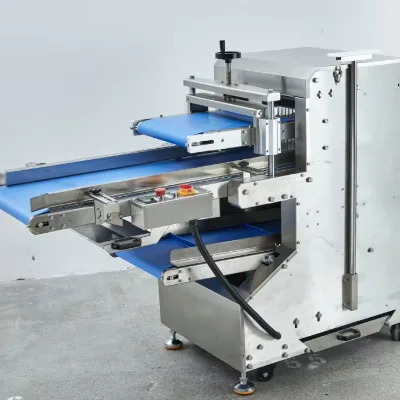
Procurement professionals must first distinguish between the cutting blade component and the complete slicing machine when sourcing for a bakery. The market data indicates a wide variance in product definitions, ranging from specific stainless steel blades with precision tolerances of 0.02mm to full electric units like the NKP-31D model designed for high-volume bread and pizza processing. Buyers should verify whether their requirement is for a replacement part or a standalone unit, as the specifications for a 25-blade assembly differ significantly from a 31-blade industrial slicer.
Understanding the intended application is critical for selecting the correct hardware, as the observed listings include machines specifically tailored for bakery shops, cake decoration, and biscuit production. While some units are marketed as multi-function tools with electric power sources, others are simple accessories with plastic components or specific dimensions like 2050L880W1230H. Clarifying the operational context ensures that the purchased item matches the throughput needs of the facility, preventing the acquisition of underpowered devices or oversized machinery that cannot fit the existing production line.
Product Scope and Observed Listing Signals
The observed product range reveals a complex mix of materials and configurations, requiring buyers to scrutinize listings for specific material claims such as stainless steel versus plastic. Some entries explicitly list stainless steel as the primary material, which is essential for food safety and durability in wet bakery environments, while other items may feature plastic components or be categorized broadly under baking tools. This inconsistency necessitates a careful review of the material specification to ensure the blade or machine can withstand the rigors of daily commercial use without rapid degradation.
Packaging and origin details also serve as key signals for the quality and logistics planning of the procurement. Listings frequently mention origins in China, with specific locations like Guangzhou and Hebei, and packaging ranging from wooden boxes to cartons. These details impact the total landed cost and handling requirements, as wooden cases often imply heavier, more robust industrial equipment, whereas cartons might suggest lighter accessories. Buyers must align these logistical signals with their internal storage and shipping capabilities to avoid unexpected delays or damage during transit.
Technical Specifications to Verify
Precision and dimensional accuracy are paramount when evaluating bread cutter blades and slicing machines for commercial bakery use. The market data highlights specific precision ratings of 0.02mm and various model dimensions, such as 275770.4mm or 822100.8mm, which dictate the quality of the cut and the uniformity of the final product. Procurement teams must verify that the listed specifications match the required slice thickness, with observed options including 12mm and 15mm settings, to ensure consistency in product presentation and portion control.
Power requirements and physical footprint are equally critical technical factors that determine compatibility with existing bakery infrastructure. Units like the NKP-31D operate on electric power sources with specific wattage, such as 0.18 Kw, and require significant floor space, with dimensions reaching up to 2050mm in length. Buyers must confirm voltage compatibility, typically 220 V, and ensure that the machine's weight, often around 70kg, can be supported by the facility floor. Verifying these parameters prevents installation failures and ensures the equipment integrates seamlessly into the workflow.
Compliance and Safety Documentation
Certification status is a primary indicator of regulatory compliance and safety standards for equipment used in food production environments. The available data confirms the presence of CE, RoHS, and ISO9001 certifications for certain products, which are essential for meeting international safety and environmental requirements. Buyers should request valid certification documents for every unit purchased to ensure that the machinery adheres to the necessary electrical and mechanical safety standards, particularly for high-speed slicing operations.
Documentation regarding the manufacturing standard and product condition is also vital for risk management and operational continuity. Listings often specify standards such as "Standard" or "As per request," and confirm that the condition is "New," which helps in establishing a baseline for quality assurance. It is imperative to verify that the product standard aligns with local food safety regulations and that the warranty, typically listed as one year, is clearly defined in the contract to protect against premature failure or manufacturing defects.
Cost Drivers and Commercial Terms
The pricing structure for baking shop bread cutter blades and machines is influenced by a combination of material costs, complexity, and customization options. The observed price range is extensive, spanning from 0.64 USD for basic components to 1,000,000 USD for large-scale industrial systems, reflecting the vast difference between a simple blade and a fully automated slicing line. Buyers must analyze the total cost of ownership, including the cost of customization, which is noted as available, to determine the most economical solution that meets their specific production volume and quality requirements.
Minimum Order Quantities (MOQ) and payment terms significantly affect the financial planning and inventory strategy for procurement teams. The data indicates an MOQ range from 1 to 1000 units, with some specific listings offering a low entry point of 1 set, which is advantageous for small bakeries or pilot projects. Understanding these thresholds allows buyers to negotiate better terms and manage cash flow effectively, ensuring that they can scale their orders up or down without incurring prohibitive costs or facing stockouts during peak production periods.
Supplier Qualification and Quality Control
Supplier qualification should focus on verifying the origin and manufacturing capabilities of the provider, as the data points to specific regions like Guangzhou and Hebei in China. Buyers must assess the supplier's ability to deliver consistent quality, particularly given the variation in product attributes such as blade count, ranging from 22.31614.3cm accessories to heavy-duty machines with 31 blades. Establishing a relationship with a supplier who can provide detailed product specifications and maintain a track record of reliability is essential for long-term operational stability.
Quality control measures must be integrated into the procurement process to ensure that the delivered goods meet the agreed-upon standards and performance expectations. The availability of customization and the presence of specific model numbers like HS01B or KI90044 suggest that suppliers have the capacity to tailor products to specific needs. Buyers should implement rigorous inspection protocols, including pre-shipment checks and post-delivery testing, to verify that the equipment functions as advertised and meets the precision and safety requirements of the bakery environment.
Long-Term Procurement Checks
Sustainability and maintenance requirements are key considerations for the long-term viability of bakery equipment procurement. Buyers should evaluate the availability of spare parts, such as replacement blades or motor components, to minimize downtime and extend the lifespan of the machinery. The observation of specific advantages like "Easy Operation High Efficiency" suggests that user-friendly designs can reduce training costs and operational errors, but these benefits must be sustained through regular maintenance and timely part replacement.
Future-proofing the procurement strategy involves monitoring market trends and technological advancements in bread slicing technology. As the industry evolves, equipment with features like high productivity and multi-function capabilities will likely become the standard, requiring buyers to stay informed about new models and standards. Regularly reviewing supplier performance and product updates ensures that the bakery remains competitive and can adapt to changing consumer demands for high-quality, uniformly sliced bread and bakery products.
FAQs
What certifications are available for baking shop bread cutter blade products?
Products typically hold CE, RoHS, and ISO9001 certifications to ensure safety and quality compliance. These standards verify that the manufacturing processes meet international requirements for electrical and mechanical safety. Buyers should verify specific documentation with suppliers to confirm that the delivered items match the requested certification scope for their local market regulations.
Can I customize the specifications for a bread cutting machine?
Yes, customization is available for many industrial bread cutting machines. Buyers can request specific dimensions, blade counts, or power sources to fit their production line. For example, models like the NKP-31D offer 31 blades, while others may have 25 blades. Customization allows for tailored solutions that match unique bakery throughput requirements and spatial constraints.
What is the typical MOQ for ordering baking shop bread cutter blades?
The minimum order quantity generally ranges from 1 to 1000 units depending on the supplier and product type. Some vendors accept orders as low as one set for testing or small bakery needs. Larger industrial machines may require higher MOQs. Buyers should confirm the exact MOQ with the supplier before finalizing the purchase to ensure it aligns with their budget and storage capacity.
Which materials are used to construct these bread cutting machines?
Machines are commonly constructed using stainless steel for durability and hygiene, while accessories may use plastic. Stainless steel components ensure resistance to corrosion and ease of cleaning in food processing environments. The choice of material impacts the machine's lifespan and maintenance requirements. Buyers should verify material grades with suppliers to ensure compliance with food safety standards.
What are the standard dimensions for a bread slicing machine?
Standard dimensions vary by model, with some units measuring approximately 720x472x720mm. Larger industrial models may reach 2050x880x1230mm. Buyers must check the specific external dimensions to ensure the machine fits their bakery layout. Accurate sizing prevents installation issues and ensures efficient workflow integration within the existing production area.
How is the power consumption of these bread cutters?
Power consumption varies, with some electric models operating at 0.18 Kw. Most machines require a 220 V power source for standard operation. Buyers should verify the voltage and power rating to ensure compatibility with their facility's electrical infrastructure. Efficient power usage helps reduce operational costs while maintaining consistent slicing performance for bread, pizza, and cakes.